




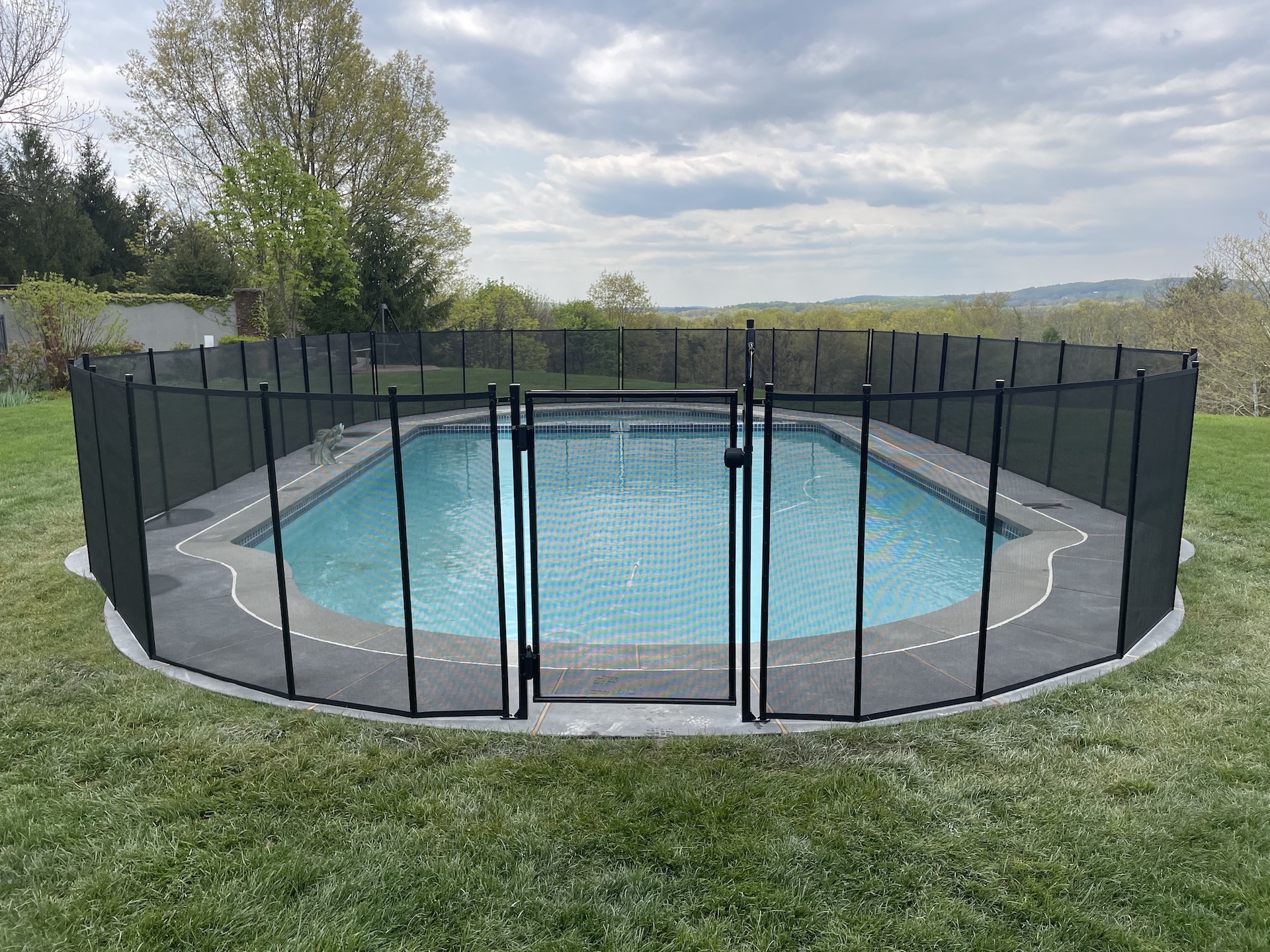
Most pool fence safety requirements call for a barrier at least 48 to 60 inches tall, with no gaps larger than 4 inches, self-closing and self-latching gates, and latches placed at least 54 inches above the ground. These rules come from local building codes, which are usually based on the International Swimming Pool and Spa Code (ISPSC) or similar state model codes. Exact numbers vary by city and county, so homeowners should always confirm details with their local permitting office before installing or replacing a pool barrier.
Pool fence rules aren’t paperwork for the sake of paperwork. They exist because drowning is preventable, and a proper barrier is one of the most effective tools for stopping it. The CDC has repeatedly identified drowning as one of the leading causes of unintentional injury death among children ages 1 to 4, and it notes that a four-sided isolation fence separating the pool from the house and yard can reduce drowning risk significantly compared to a fence that only encloses the yard.
Local governments translate this safety research into building codes. Most jurisdictions adopt some version of the ISPSC or a state-specific residential pool code, then adjust height, gap, and latch specifications to match their own risk assessments. That’s why pool fence regulations can look slightly different from one county to the next, even though the underlying goal — keeping unsupervised children away from open water — stays the same everywhere.
While every municipality writes its own ordinance, most swimming pool fence requirements share a common structural backbone. Here’s what shows up in the majority of residential pool codes across the country.
Different fencing materials meet the same core pool safety fence requirements, but they come with different maintenance needs and cost ranges. This comparison gives homeowners a starting point before choosing a material.
| Fence Type | Typical Height Compliance | Maintenance Level | Approximate Cost per Linear Foot* | Climbability Risk |
|---|---|---|---|---|
| Mesh pool fencing | Meets 48–60 inch codes | Low; removable panels | $15–$25 | Very low |
| Aluminum fencing | Meets 48–60 inch codes | Low; rust-resistant | $25–$40 | Low, if vertical bars |
| Wrought iron fencing | Meets 48–60 inch codes | Medium; needs rust checks | $30–$50 | Low, if spacing is code-compliant |
| Wood fencing | Meets height codes if built correctly | High; warps, needs sealing | $20–$35 | Higher, if horizontal rails are used |
| Glass/panel fencing | Meets height codes | Medium; needs cleaning | $50–$100 | Very low |
*Cost estimates are general industry ranges and will vary by region, installer, and material grade. Homeowners should request written quotes from at least two licensed fencing contractors before committing.
Homeowners often search for a single national standard, but pool fence regulations are set locally, not nationally. A county’s building department may adopt the ISPSC as its baseline, then add stricter requirements based on local drowning statistics, climate, or housing density. Nearby counties or cities within the same state can have different minimum heights, different gate rules, or different inspection timelines.
Because of this, two homes a short drive apart can technically follow different pool fence rules even though both fall under the same state umbrella. The safest approach for any homeowner — whether installing a new pool, buying a home with an existing pool, or replacing an old fence — is to call the local permitting or code enforcement office directly and ask for the current residential pool barrier ordinance in writing. This avoids relying on outdated blog posts or a neighbor’s fence as a reference point, since both can be wrong or grandfathered under older rules.
Real estate agents and home inspectors in many markets also flag non-compliant pool fencing during transactions, since it can affect financing, insurance underwriting, or closing timelines. Getting ahead of this before listing a home, or before a home inspection, tends to save both time and money.
Meeting pool fence safety requirements isn’t just about passing an inspection — it’s about closing the small gaps, literal and procedural, that lead to preventable accidents. Height, latch placement, gap spacing, and isolation fencing all work together as a system, not as separate boxes to check. Because these rules are set and enforced locally, the single most reliable step any homeowner can take is contacting their city or county building department directly for the current ordinance, then confirming compliance with a licensed fencing contractor or inspector. If you’re planning a new pool, buying a home with one, or simply unsure whether your current fence meets code, reach out to your local permitting office this week to get written confirmation before the next pool season.
What is the minimum legal height for a pool fence?
Most jurisdictions set the minimum at 48 inches, though some require 60 inches. The exact number depends on local building code, so it’s best to confirm with your city or county before installing a fence.
Do I need a permit to install a pool fence?
In most areas, yes. Pool fence installation is typically tied to the same permitting process as the pool itself, and a final inspection is often required before the pool can legally be used.
Can I use my house wall as one side of the pool fence?
Many older codes allowed this, but newer ordinances increasingly require a four-sided isolation fence that fully separates the pool from the house, including any doors that open directly onto the pool area.
What happens if my pool fence doesn’t meet code?
Consequences vary by jurisdiction but commonly include fines, a stop-work order until corrections are made, and possible complications with home insurance or liability in the event of an accident.
Are pool fence requirements different for above-ground pools?
Some codes reduce barrier requirements if the pool wall itself is at least 48 inches high and access ladders are removable or lockable, but this varies significantly by local ordinance, so it should never be assumed without checking.
How often should I inspect my pool fence gate?
A monthly check is a reasonable habit — testing the self-closing hinge, the latch height, and any loose pickets or corroded hardware, especially after storms or heavy use.